Cardiopulmonary Arrest Symptoms: Warning Signs, Causes and Emergency Response
Quick Answer
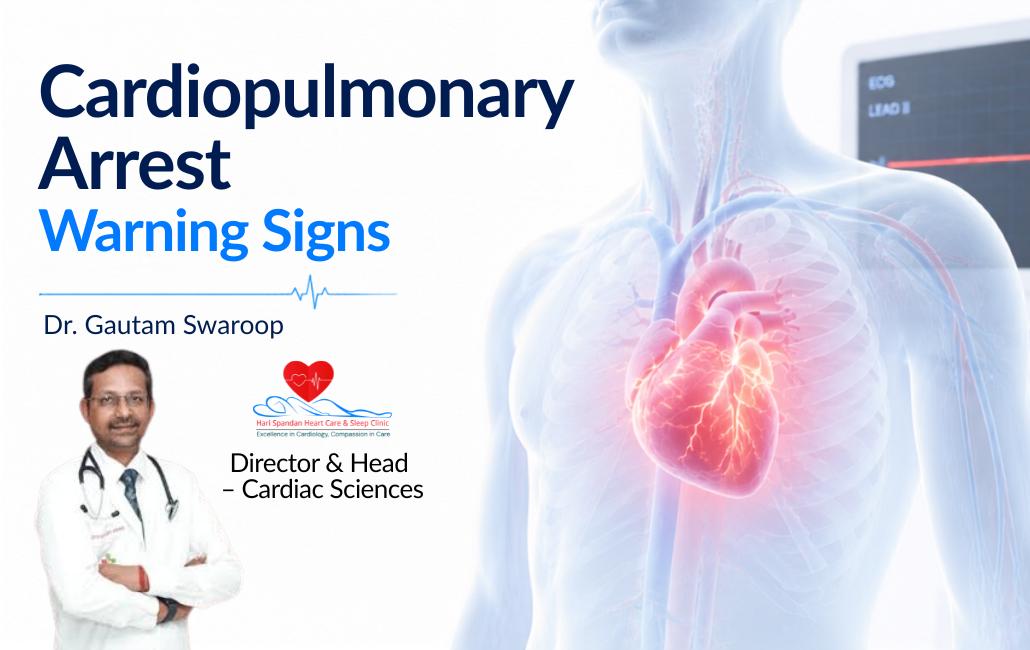
What are the cardiopulmonary arrest symptoms? The primary cardiopulmonary arrest symptoms include a sudden loss of consciousness, an immediate lack of a palpable pulse, and no breathing or abnormal gasping for air. Because this is a life-threatening medical emergency, recognizing these signs and initiating immediate CPR and defibrillation is critical to survival.
Introduction
Experiencing a cardiac emergency is a terrifying prospect, and understanding exactly what to look for can literally mean the difference between life and death. Every year, millions of people suffer from sudden cardiac emergencies, yet many bystanders hesitate to act because they are unsure of what is happening. Recognizing cardiopulmonary arrest symptoms early is the most vital step in the chain of survival.
At Harispandan Heart Care & Sleep Clinic, we dedicate ourselves to providing expert cardiovascular care and empowering our community with life-saving knowledge. Cardiopulmonary arrest strikes swiftly, often without obvious warning, causing the heart and lungs to abruptly stop functioning. Therefore, knowing how to identify the signs, understanding the underlying causes, and knowing how to respond is essential.
In this comprehensive guide, we will explore the critical warning signs of heart failure, detail the exact symptoms of a cardiopulmonary arrest, compare it to a heart attack, and explain how underlying conditions like sleep apnea impact your heart health.
Table of Contents
- What Is Cardiopulmonary Arrest?
- Cardiopulmonary Arrest Symptoms
- What Causes Cardiopulmonary Arrest?
- Cardiopulmonary Arrest vs Heart Attack
- What Should You Do If Someone Has Cardiopulmonary Arrest Symptoms?
- How Is Cardiopulmonary Arrest Diagnosed?
- Treatment of Cardiopulmonary Arrest
- Can Cardiopulmonary Arrest Be Prevented?
- When Should You See a Cardiologist?
- Cardiopulmonary Arrest and Sleep Disorders
- Key Takeaways
- Frequently Asked Questions
- Conclusion
What Is Cardiopulmonary Arrest?
Definition Box: Cardiopulmonary arrest (often referred to interchangeably with sudden cardiac arrest) is the abrupt loss of heart function, breathing, and consciousness. It is usually triggered by an electrical disturbance in the heart that disrupts its pumping action, stopping blood flow to the brain and the rest of the body.
Without immediate intervention, cardiopulmonary arrest leads to brain damage within mere minutes and death shortly thereafter. It is a severe cardiac emergency response situation requiring immediate CPR (cardiopulmonary resuscitation) and an automated external defibrillator (AED).
Cardiopulmonary Arrest Symptoms
Recognizing the symptoms immediately is crucial. The signs of an actual cardiopulmonary arrest are drastic and unmistakable.
Common Symptoms
When a person goes into cardiopulmonary arrest, the following symptoms occur simultaneously and suddenly:
- Sudden loss of consciousness: The person will collapse and become entirely unresponsive to shouting or physical tapping.
- Lack of pulse: There will be no heartbeat and no palpable pulse at the neck or wrist.
- No breathing or gasping: The person will completely stop breathing, or they may exhibit agonal breathing, which sounds like abnormal, labored gasping or snorting.
Warning Signs Before Cardiopulmonary Arrest
While the arrest itself is sudden, some people experience warning signs in the hours or minutes leading up to the event. Recognizing these can allow you to seek emergency medical help before the heart actually stops.
| Pre-Arrest Warning Sign | Description |
|---|---|
| Chest Pain | Severe chest pain before cardiac arrest, often described as a heavy pressure or squeezing sensation. |
| Shortness of Breath | Sudden, unexplained difficulty breathing or gasping for air even while resting. |
| Palpitations | A racing, fluttering, or highly irregular heartbeat indicating a potential lethal arrhythmia. |
| Profound Weakness | An overwhelming sense of fatigue, dizziness, or feeling like you are about to pass out (syncope). |
| Nausea or Vomiting | Sudden gastrointestinal distress accompanied by cold sweats. |
Symptoms That Require Immediate Emergency Action
If you or someone around you experiences any of the following, do not wait. Call emergency services immediately:
- Unexplained fainting or unresponsiveness.
- Crushing chest pain radiating to the arm, back, or jaw.
- Sudden, severe shortness of breath.
- A remarkably fast or chaotic heartbeat accompanied by dizziness.
What Causes Cardiopulmonary Arrest?
Cardiopulmonary arrest is an electrical problem, but numerous underlying conditions can trigger this catastrophic short-circuit in the heart.
Cardiac Causes
Most cardiopulmonary arrests stem from primary heart conditions. Ventricular fibrillation, a chaotic and rapid electrical rhythm that prevents the heart from pumping blood, is the most common cause. Other cardiac causes include severe coronary artery disease, untreated heart attacks (myocardial infarctions), cardiomyopathy (enlarged heart), and congenital heart defects.
Respiratory Causes
A lack of oxygen to the body will eventually cause the heart to stop. Respiratory failure can lead directly to cardiopulmonary arrest. Common triggers include severe asthma attacks, choking, drowning, pulmonary embolism (a blood clot in the lungs), and severe sleep apnea that restricts nighttime oxygen.
Other Causes
External trauma and severe bodily stress can also stop the heart. These include major physical trauma, severe hemorrhage (blood loss), drug overdoses, carbon monoxide poisoning, and extreme electrocution.
Summary of Causes
| Category | Specific Triggers |
|---|---|
| Cardiac | Ventricular fibrillation, heart attack, heart failure, cardiomyopathy. |
| Respiratory | Choking, drowning, pulmonary embolism, severe asthma. |
| Trauma / Other | Drug overdose, electrocution, massive blood loss, severe electrolyte imbalance. |
Cardiopulmonary Arrest vs Heart Attack
People frequently use these terms interchangeably, but they are entirely different medical events. Understanding the difference is vital for rendering appropriate aid.
| Feature | Heart Attack (Myocardial Infarction) | Cardiopulmonary Arrest |
|---|---|---|
| The Basic Problem | A “plumbing” problem. Blood flow to a part of the heart is blocked. | An “electrical” problem. The heart malfunctions and stops beating entirely. |
| Consciousness | The person remains awake and can talk, though they are in pain. | The person immediately loses consciousness and is unresponsive. |
| Breathing & Pulse | The person continues breathing and has a palpable pulse. | There is no normal breathing and a complete lack of pulse. |
| Primary Treatment | Emergency hospital care to open the blocked artery (stent or clot-busting drugs). | Immediate CPR and defibrillation (AED) to restart the heart. |
| Relationship | A heart attack increases the risk of, and can cause, cardiopulmonary arrest. | Cardiopulmonary arrest can be the fatal end result of an untreated heart attack. |
What Should You Do If Someone Has Cardiopulmonary Arrest Symptoms?
Time is the most critical factor. Brain damage begins within four to six minutes after the heart stops. Follow these step-by-step emergency instructions:
- Check for Responsiveness: Shake the person gently by the shoulders and shout, “Are you okay?” If they do not respond, proceed immediately to the next step.
- Call Emergency Services: Shout for nearby help. Call for an ambulance immediately and explicitly state that you have an unresponsive person who is not breathing.
- Check for Breathing: Look at the chest for rise and fall. If the person is not breathing, or only gasping sporadically, assume cardiac arrest.
- Begin High-Quality CPR: Place the heel of your hand in the center of their chest, place your other hand on top, and interlock your fingers. Push hard and fast (at least 2 inches deep, at a rate of 100 to 120 compressions per minute). Allow the chest to fully recoil between pushes.
- Use an AED: If an Automated External Defibrillator is available, turn it on immediately and follow the voice prompts. Do not stop CPR until the AED tells you to stand clear to deliver a shock.
- Continue Until Help Arrives: Do not stop CPR and defibrillation cycles until paramedics arrive and take over, or until the person begins to breathe normally and wake up.
How Is Cardiopulmonary Arrest Diagnosed?
In an out-of-hospital setting, diagnosis relies entirely on visual symptoms: loss of consciousness, absence of breathing, and lack of pulse. Once paramedics arrive or the patient is in the emergency room, healthcare providers use clinical tools.
An Electrocardiogram (ECG or EKG) is immediately attached to the patient to identify the specific electrical rhythm of the heart, such as ventricular fibrillation or asystole (flatline). Blood tests are later used to check for cardiac enzymes indicating a heart attack, as well as electrolyte imbalances or oxygen levels. Chest X-rays and echocardiograms are utilized post-resuscitation to assess structural damage to the heart and lungs.
Treatment of Cardiopulmonary Arrest
Treatment occurs in two phases: the immediate life-saving phase and the post-resuscitation care phase.
Immediate treatment involves uninterrupted CPR to manually pump blood to the brain, combined with rapid defibrillation to shock the heart back into a normal rhythm. Paramedics will also administer intravenous emergency medications, such as epinephrine or amiodarone, to help stimulate the heart.
If the patient is successfully resuscitated, post-cardiac arrest care begins in the Intensive Care Unit (ICU). Doctors may initiate targeted temperature management (cooling the body) to protect the brain from swelling and damage. Interventional cardiologists may also perform a coronary angiogram to clear any blocked arteries with a stent. Long-term treatment often involves surgically implanting an Implantable Cardioverter-Defibrillator (ICD) to monitor the heart and deliver an internal shock if a lethal arrhythmia returns.
Can Cardiopulmonary Arrest Be Prevented?
While some cases are completely unpredictable, many cardiopulmonary arrests can be prevented through proactive heart health management.
- Routine Screenings: Regularly check your blood pressure, cholesterol, and blood sugar levels.
- Healthy Lifestyle: Adopt a heart-healthy diet, engage in regular cardiovascular exercise, quit smoking, and limit alcohol consumption.
- Manage Underlying Conditions: Strictly manage diabetes, hypertension, and known heart conditions under the guidance of a specialist.
- Listen to Your Body: Never ignore the warning signs of heart failure or unusual chest pains. Seek medical attention promptly.
When Should You See a Cardiologist?
Early intervention is your best defense against catastrophic cardiac events. You should schedule an evaluation at Harispandan Heart Care & Sleep Clinic if you experience recurrent chest pain or pressure, episodes of unexplained fainting (syncope), severe shortness of breath during normal activities, or chronic palpitations and irregular heartbeats. Additionally, if you have a family history of sudden cardiac death or congenital heart disease, a thorough cardiac screening is highly recommended.
Cardiopulmonary Arrest and Sleep Disorders
At Harispandan Heart Care & Sleep Clinic, we specialize in the crucial intersection of cardiovascular health and sleep medicine. There is a profound link between sleep apnea and heart health.
Obstructive Sleep Apnea (OSA) causes your airway to collapse during sleep, stopping your breathing multiple times an hour. This triggers severe drops in blood oxygen levels (hypoxia) and forces your body to release stress hormones. Over time, this intense nightly strain on the heart leads to high blood pressure, atrial fibrillation, and significantly increases your risk of suffering a sudden cardiopulmonary arrest while sleeping. Treating sleep apnea with CPAP therapy or other interventions drastically reduces this cardiac risk.
Key Takeaways
- Cardiopulmonary arrest is a sudden, life-threatening cessation of heart and lung function.
- The main cardiopulmonary arrest symptoms are sudden unconsciousness, lack of pulse, and no breathing.
- Warning signs like severe chest pain, shortness of breath, and palpitations may precede the event.
- Cardiopulmonary arrest is an electrical failure of the heart, whereas a heart attack is a circulation blockage.
- Immediate action is required: Call emergency services, begin CPR, and use an AED.
- Conditions like severe coronary artery disease and untreated sleep apnea significantly increase your risk.
- Post-arrest survival depends heavily on the speed of bystander CPR.
- Routine cardiac screenings at a specialized clinic can identify risk factors before a catastrophic event occurs.
Frequently Asked Questions
1. What are the earliest cardiopulmonary arrest symptoms?
The earliest symptoms of the arrest itself are sudden collapse, no pulse, and no breathing. Preceding warning signs may include chest pain, dizziness, or shortness of breath.
2. Is cardiopulmonary arrest the same as a heart attack?
No. A heart attack is caused by a blocked artery (plumbing issue), while cardiopulmonary arrest is caused by an electrical malfunction that stops the heart completely.
3. Can you survive a cardiopulmonary arrest?
Yes, survival is possible, but it requires immediate bystander CPR and rapid use of an AED to restore the heart’s rhythm before brain damage occurs.
4. What is the most common cause of sudden cardiac arrest?
The most common cause is ventricular fibrillation, a chaotic electrical rhythm in the heart usually triggered by underlying coronary artery disease.
5. Can sleep apnea cause cardiopulmonary arrest?
Yes. Severe, untreated obstructive sleep apnea causes significant oxygen deprivation during sleep, which can trigger lethal arrhythmias and sudden cardiac arrest.
6. What should I do if someone collapses and stops breathing?
Call emergency medical services immediately, begin hands-only CPR by pushing hard and fast in the center of the chest, and ask someone to find an AED.
7. Does CPR restart the heart?
CPR manually pumps oxygenated blood to the brain and vital organs to keep them alive, but an electric shock from an AED is usually required to actually restart a normal heart rhythm.
8. Can young, healthy athletes suffer from cardiopulmonary arrest?
Yes. In young athletes, cardiopulmonary arrest is often caused by undiagnosed congenital heart defects, such as hypertrophic cardiomyopathy, or sudden blunt trauma to the chest.
9. How is a cardiopulmonary arrest treated at the hospital?
Hospitals use advanced life support, defibrillation, intravenous medications, targeted temperature management to protect the brain, and potentially coronary stenting.
10. What is agonal breathing?
Agonal breathing is abnormal, sporadic gasping or snorting. It is a reflex action of the brainstem and a clear cardiopulmonary arrest symptom indicating that immediate CPR is needed.
11. Can stress cause a cardiopulmonary arrest?
While rare, extreme emotional or physical stress can trigger a surge of adrenaline that may induce a lethal arrhythmia in individuals with underlying heart conditions.
12. What is an ICD?
An Implantable Cardioverter-Defibrillator (ICD) is a small battery-powered device placed in the chest of high-risk patients to detect and automatically shock lethal arrhythmias back to normal.
13. How long can a person go without oxygen before brain damage occurs?
Permanent brain damage begins to occur within 4 to 6 minutes of oxygen deprivation following a cardiopulmonary arrest.
14. Are there any warning signs days before an arrest?
Some patients report experiencing intermittent chest pain, unusual fatigue, or shortness of breath in the days or weeks leading up to the event, though many arrests happen without warning.
15. When should I see a doctor to prevent cardiac arrest?
You should see a cardiologist if you have a family history of heart disease, experience palpitations, unexplained fainting, or have been diagnosed with conditions like sleep apnea or hypertension.
Conclusion
Recognizing cardiopulmonary arrest symptoms is an essential skill that can save a life. When a person suddenly loses consciousness, stops breathing, and loses their pulse, every single second counts. By understanding the distinction between a heart attack and a sudden cardiac arrest, being aware of the crucial warning signs, and knowing how to perform CPR and use an AED, you empower yourself to act decisively in an emergency. Furthermore, managing underlying health conditions—ranging from high blood pressure to severe sleep apnea—is your best defense against ever experiencing this catastrophic event.
Book your Appointment now
Your heart health and sleep quality are deeply connected, and neither should be ignored. If you are experiencing chest pain, irregular heartbeats, unexplained fatigue, or suspect you suffer from sleep apnea, proactive care is essential.
Protect your heart today. Contact Harispandan Heart Care & Sleep Clinic to schedule a comprehensive cardiovascular and sleep health evaluation. Our expert team is dedicated to identifying risks early and providing advanced, personalized treatment plans.