Up in Smoke: How Smoking Secretly Damages Your Heart Valves
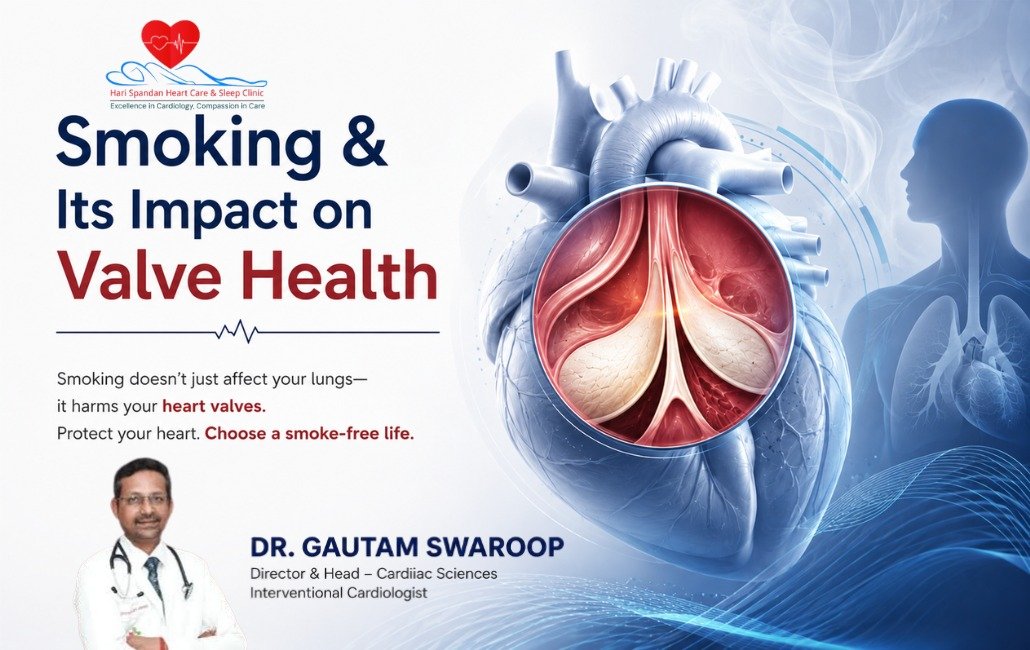
Quick Answer: How Does Smoking Affect Heart Valves?
Smoking severely damages your heart valves rapidly. Specifically, it accelerates dangerous calcium buildup and raises your blood pressure. Furthermore, toxic chemicals destroy the delicate inner lining of the valves.
Consequently, they become stiff and narrowed, causing valve stenosis. Alternatively, they become weak and leaky, causing valve regurgitation. Therefore, your heart works dangerously hard. Ultimately, this leads to a massive risk of heart failure.
Introduction
People usually associate smoking with lung cancer and clogged arteries. However, a hidden mechanical danger occurs with every single puff. Specifically, smoking causes slow, irreversible damage to your heart valves.
Your heart relies on four delicate valves to direct blood flow. Consequently, they act as vital one-way doors. But, toxic chemicals break down their structural integrity quickly. At Harispandan Clinic, we see these devastating cardiovascular consequences daily.
Therefore, understanding this habit is crucial for your long-term health. Below, we explain exactly how smoking destroys valve tissue.
Table of Contents
- The Role of Your Heart Valves
- 3 Ways Smoking Directly Destroys Valve Health
- The Hidden Danger: Smoking, Gums, and Heart Infections
- Healthy Valve vs. Smoker’s Valve
- Can Quitting Reverse Valve Damage?
- Warning Signs of Heart Valve Disease
- Frequently Asked Questions
- Key Takeaways
- Protect Your Heart with Harispandan Clinic
The Role of Your Heart Valves
Your heart possesses four distinct valves. Specifically, these are the aortic, mitral, tricuspid, and pulmonary valves. First, they open completely to let blood flow forward. Next, they snap shut tightly to prevent dangerous backward flow.
Therefore, these valves must remain perfectly flexible and strong. However, damaged valves force your heart to pump much harder. Consequently, this constant strain leads to exhaustion and heart failure.
3 Ways Smoking Directly Destroys Valve Health
1. Accelerating Valve Calcification (Aortic Stenosis)
First, smoking drastically impacts your aortic valve. Specifically, tobacco chemicals trigger a massive inflammatory response in your bloodstream. Furthermore, this inflammation accelerates calcium deposits on the valve leaflets.
Consequently, the flexible valve becomes rigid, thick, and severely narrowed. Doctors call this dangerous condition Aortic Stenosis. Therefore, your heart must squeeze with immense force. Ultimately, it struggles to push blood through this tiny opening.
2. High Blood Pressure and Valve Strain (Regurgitation)
Next, nicotine acts as a powerful stimulant in your body. Specifically, it constricts your blood vessels and raises your blood pressure. Consequently, high pressure forces blood to slam against closed heart valves.
Over time, this intense pressure stretches and weakens the delicate tissue. Therefore, the valves simply cannot close properly anymore. Ultimately, this creates a leaky valve, known as valve regurgitation. Blood then spills backwards dangerously into your heart chambers.
3. Endothelial Destruction
Finally, smoking actively destroys your protective cell lining. Specifically, doctors call this delicate inner layer the endothelium. Furthermore, carbon monoxide and free radicals are highly toxic here.
Consequently, smoking literally strips away this vital protective layer. Therefore, your heart valves become highly susceptible to tearing. Ultimately, this damage promotes severe scarring and dangerous fatty plaques.
The Hidden Danger: Smoking, Gums, and Heart Infections
Interestingly, a strong link exists between smoking and oral health. First, smoking severely compromises your overall immune system. Consequently, it acts as a leading cause of severe gum disease.
Therefore, dangerous bacteria easily enter your bloodstream through infected gums. Furthermore, smoking has already damaged your valve surfaces. Thus, traveling bacteria rapidly latch onto the scarred tissue. Ultimately, this causes a life-threatening infection called Infective Endocarditis.
Healthy Valve vs. Smoker’s Valve
| Feature | Healthy Heart Valve | Smoker’s Heart Valve |
|---|---|---|
| Tissue Flexibility | Soft, thin, and highly flexible. | Stiff, thick, and rigid. |
| Calcium Deposits | None to minimal. | Heavy, accelerated calcification. |
| Closure Quality | Seals tightly, preventing backflow. | May leak due to stretching and scarring. |
| Endothelium (Lining) | Smooth and completely protective. | Damaged, inflamed, and sticky. |
| Infection Risk | Low risk of bacterial attachment. | High risk of bacteria latching onto scars. |
Can Quitting Reverse Valve Damage?
We hear this question frequently at Harispandan Clinic. Unfortunately, quitting smoking cannot reverse existing structural damage. Specifically, it will not magically dissolve heavy calcium deposits. Furthermore, it cannot repair a torn valve leaflet.
Consequently, severe cases absolutely require surgical repair or replacement. However, quitting smoking remains incredibly important for your survival. First, stopping tobacco halts the rapid acceleration of the damage. Next, it drastically lowers your blood pressure instantly.
Therefore, it reduces the massive strain on your healthy tissue. Ultimately, quitting significantly improves your surgical recovery chances.
Warning Signs of Heart Valve Disease
Heart valve disease often develops silently over decades of smoking. Therefore, you must watch for these critical red flags:
- Unexplained shortness of breath during light physical activity.
- A feeling of heavy pressure during exercise.
- Severe heart palpitations causing a racing or fluttering heartbeat.
- Noticeable swelling accumulating in your ankles, feet, or abdomen.
- Frequent dizzy spells, lightheadedness, or sudden fainting episodes.
- A distinctive heart murmur detected during a stethoscope exam.
Frequently Asked Questions
- Does vaping also damage heart valves?
Yes, absolutely. Vaping does not produce tar. However, e-cigarettes still contain dangerous nicotine. Consequently, this raises your blood pressure and heart rate. Therefore, vaping puts severe mechanical strain on your heart valves. - Are women who smoke at a higher risk for valve disease?
Yes, they are. Studies show female smokers face significantly higher cardiovascular risks. Consequently, they experience more severe valve complications than male smokers. - How is heart valve disease diagnosed?
At Harispandan Clinic, we primarily use an Echocardiogram. Specifically, this painless ultrasound lets us see your valves moving. Therefore, we can detect blood flow issues and calcium buildup easily. - Can secondhand smoke affect my heart valves?
Yes, it certainly can. Prolonged exposure severely damages your endothelial lining. Consequently, secondhand smoke increases your risk for valve disease and heart failure.
Key Takeaways
- Smoking directly attacks the structural integrity of your mechanical valves.
- Tobacco chemicals accelerate calcium buildup, causing dangerous Aortic Stenosis.
- Nicotine induces high blood pressure and causes valve regurgitation.
- Damaged linings and gum disease increase your risk for Endocarditis.
- Quitting smoking immediately stops the rapid progression of valve damage.
Protect Your Heart with Harispandan Clinic
Heart valve disease is progressive and worsens over time. This is especially true if you continue to smoke. Therefore, early detection remains the key to preventing irreversible damage. Consequently, we can explore non-surgical management options together.
Never wait for a massive medical emergency to strike. Harispandan Clinic utilizes state-of-the-art diagnostic technology for precise evaluations. Specifically, our advanced echocardiography maps your valve health perfectly. Take the first crucial step toward securing your cardiovascular future today. Ultimately, contact our clinic to schedule your comprehensive heart health screening.
Please note, this article provides educational information only. It never replaces professional medical advice, diagnosis, or treatment. Always follow the specific advice of your treating cardiologist. Furthermore, seek immediate emergency medical attention for severe chest pain, shortness of breath, or sudden fainting.